Marrakech to Merzouga
It is the most travelled route to the Moroccan Sahara. It crosses the High Atlas and follows the kasbah road. Splitting the outbound over two days is usually advised so the road becomes part of the trip.
Road time vs. Sahara time
Qualitative assessment- Logistical effort
- High
- Outbound
- Best split over two days
- Return / onward
- Best split over two days
Experience balance: Balanced. A reasonable split between travel and experience, with little slack for long delays.
Travel times are under review, so we show no hours or percentages. The assessment combines each leg's recommended pace with your days.
Where to stop overnight
Usual stops are the Ouarzazate area or the Dades and Todra valleys. Sleeping halfway avoids arriving exhausted at the dunes.
The mountain pass
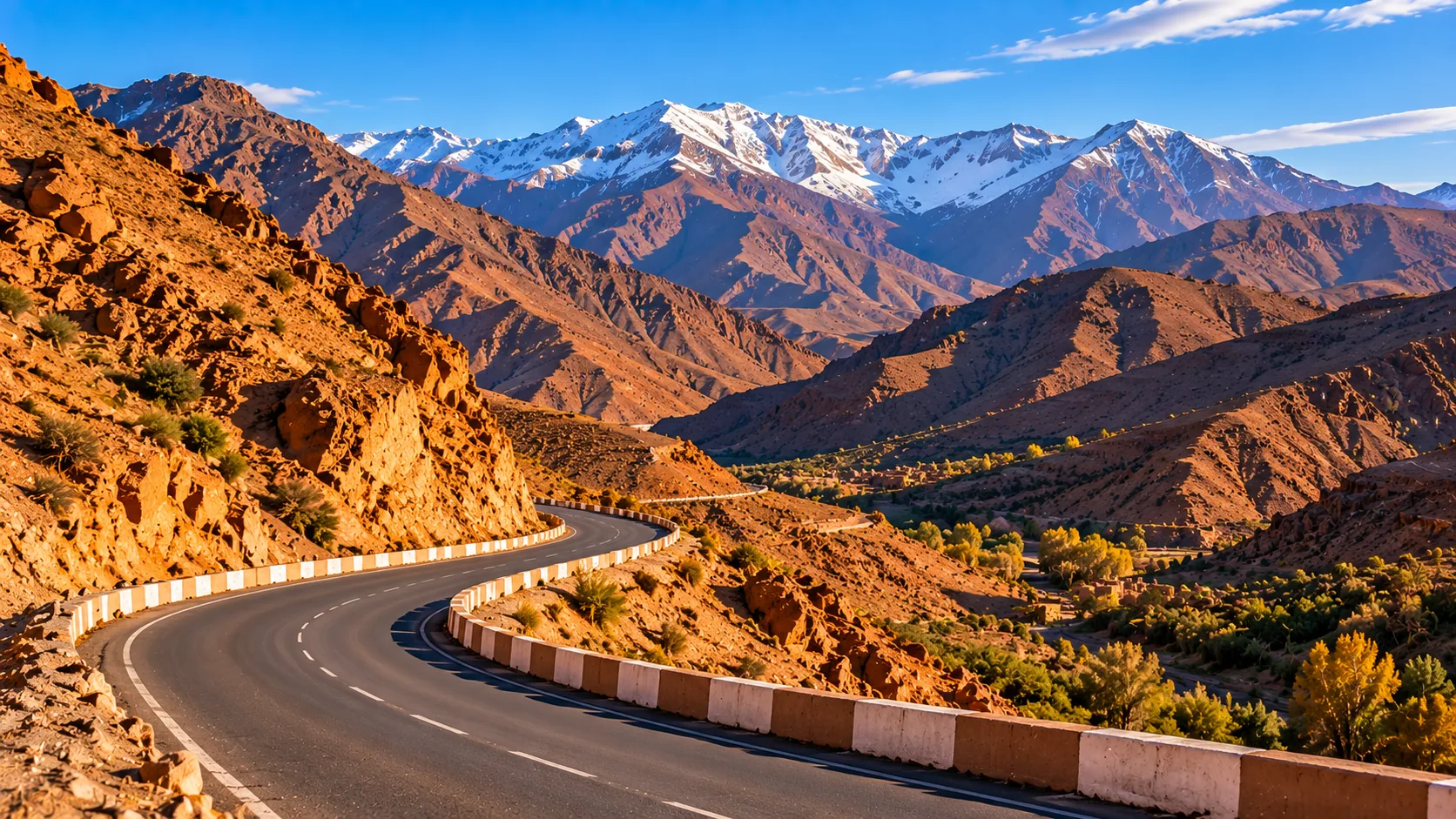
Tizi n'Tichka is a winding road where average speed is low. In winter it can be affected by snow: check conditions before leaving.
The return
If you return to Marrakech, the way back is just as long. Consider finishing in Fez if your trip allows: it avoids repeating the same road.
How many days
The more days, the better the balance. With few, the trip is dominated by driving. Check the pacing summary on this page and try your dates in the matcher.
Route stages
1
Tizi n'Tichka (High Atlas)
- Road type:
- Winding mountain road
- Highlights:
- High-mountain scenery
- Caution:
- Possible snow in winter
2
Aït Ben Haddou & Ouarzazate
- Road type:
- Main road
- Highlights:
- World Heritage ksar
- Pace:
- Good overnight stop
3
Dades Valley & Todra Gorge
- Road type:
- Main road
- Highlights:
- Gorges and kasbahs
- Pace:
- Alternative overnight stop
4
Merzouga & Erg Chebbi
- Road type:
- Main road
- Highlights:
- Erg Chebbi dunes
- Caution:
- Confirm the final access to your lodging
Keep reading
Morocco's most accessible great erg: how to get there, how much time to allow and who it suits.
The one-way crossing over the High Atlas, through Merzouga and up the Ziz Valley to Fez.
Mountain passes, police checkpoints and a realistic driving pace heading south.